
What Doctors Won't Tell You About Sensory Overload

What Doctors Won't Tell You About Sensory Overload

Sunrise PFC
Published on: 11/02/2026

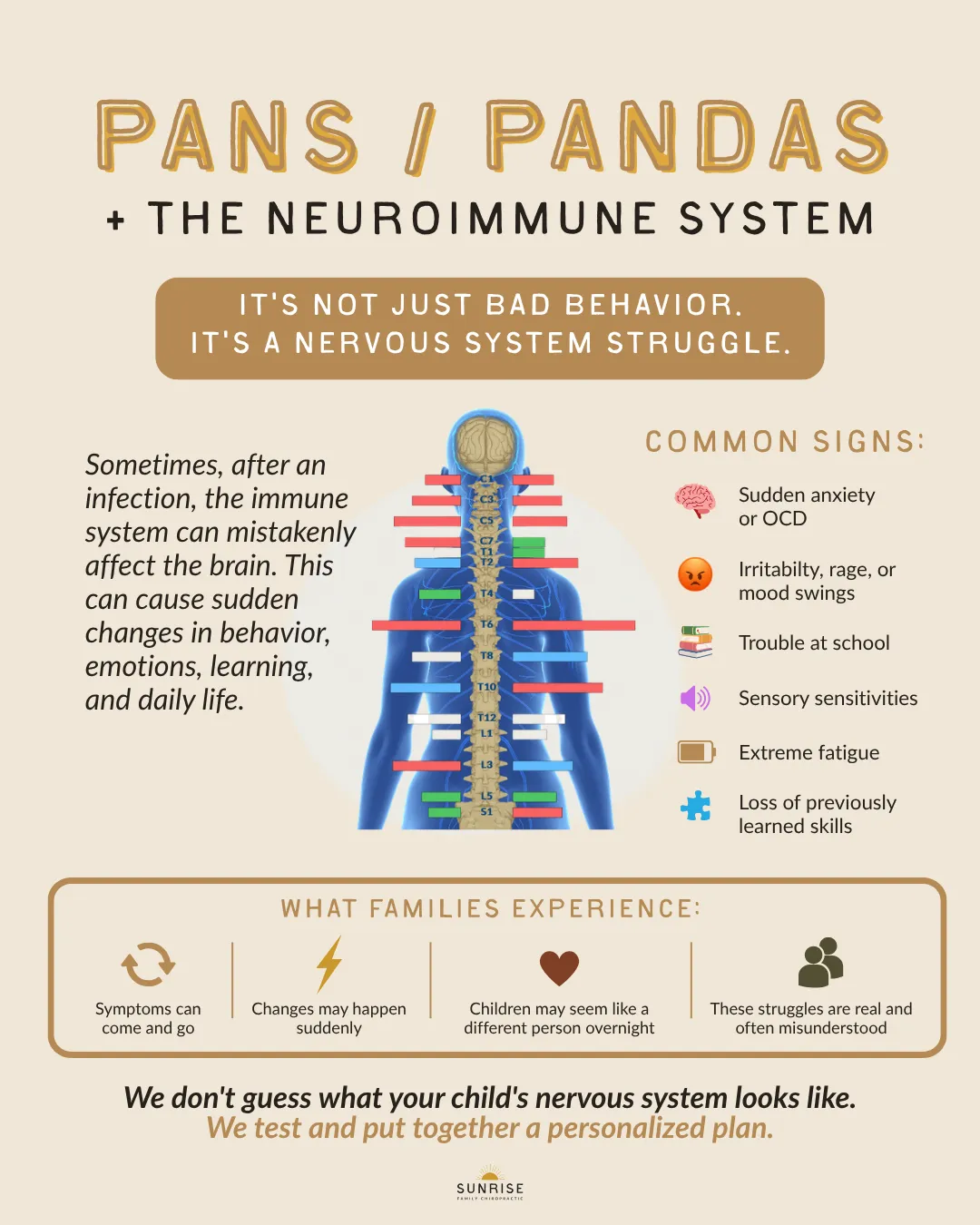
Does this sound familiar? Your child suddenly covers their ears in a noisy restaurant, has an unexpected meltdown at the grocery store, or becomes distressed by the tags in their clothing. As a parent, these moments can feel overwhelming and isolating. You might have been told that these are just behavioral issues or that your child will "grow out of it." But what if we told you there's something deeper happening in your child's nervous system?

PediatricFamilies
Discovering the Root Cause of Chronic Health Challenges in our Kids

Discovering the Root Cause of Chronic Health Challenges in our Kids

Sunrise PFC
Published on: 28/01/2026

As a parent, you've probably been told that more is better. More therapy sessions. More specialists. More interventions. You're running from speech therapy to occupational therapy, from feeding therapy to behavioral therapy, and maybe even adding in supplements, dietary changes, and sensory tools. But here's what's heartbreaking: despite all that effort, all that time, all that investment—progress feels slow. Sometimes it even stalls completely. And you're left wondering, "What are we missing? Why isn't this working?"

PediatricFamilies
The Missing Link in Childhood Immunity

The Missing Link in Childhood Immunity

Sunrise PFC
Published on: 14/01/2026

If your child seems to catch every cold, battle endless ear infections, or can't shake being sick, you're not alone—and you're not imagining it. Here's a statistic that might surprise you: around 5 out of 6 children will have had at least one ear infection by their third birthday. That's 83% of kids. And here's what happens next: according to a large study covering over 2.1 million ear infection episodes, nearly 78% were treated with antibiotics within 3 days of diagnosis.

PediatricFamilies
The Biggest Reason For Seasonal Depression

The Biggest Reason For Seasonal Depression

Sunrise PFC
Published on: 05/01/2026

You've heard the medical explanation: Seasonal Affective Disorder. Reduced sunlight. Chemical imbalances. The solution? Try a light box. Add another supplement. Maybe consider medication. But here's the question that keeps nagging at you: Why does your child struggle so predictably every single year while their sibling or classmates seem fine? The answer changes everything about how you approach your child's health—not just in winter, but year-round.

PediatricFamilies